Article by PMP Strategy and Frontier Economics
To encourage private investment in SAF production capacities, the European Union must now guarantee regulatory stability
SAF mandates create demand, but private investment will only follow if long-term revenues can be made credible and risks controlled, either through contractual agreements or the conviction that demand and willingness-to-pay will naturally increase over time. In budgetary constraints-facing Europe, regulatory stability, traceability standards and the mobilisation of a broader industrial ecosystem will become crucial.
The trajectory for the integration of sustainable aviation fuels (SAF) in the EU is now set: 2% in 2025, 6% in 2030 and 70% in 2050. The challenge is no longer to demonstrate the relevance of SAF as a decarbonisation pathway for the aviation sector. The challenge is to transform a regulatory obligation into a pipeline of scalable – and therefore financeable – projects.
The importance of the challenge is such that the equation cannot rely primarily on public funding. Building the production capacity needed to meet the 2030 mandate, with EU supply relying as little as possible on imports (to reflect energy independence considerations) would require investments in the tens of billions of euros, with a scale exceeding €20 billion. In this context, the key question becomes how we can leverage private capital to the maximum effect.
1) Bankability, a prerequisite for private capital
The financial reality is simple: private capital is deployed when the risk/return ratio is attractive and well understood, and can be contracted over time. However, SAF projects combine risks related to inputs, construction, performance, demand and price, as well as regulatory and methodological risks. This accumulation makes their profile difficult to finance within the most “standard” investment frameworks.
In other words, the first projects suffer from a first-mover disadvantage: multiple uncertainties, high structuring costs, lack of benchmarks, risk premium. Subsequent projects then benefit from a more mature market, industrial learning and a gradual decline in costs. The difficulty is therefore not to “find capital”, but to transform a SAF project into an asset that is robust enough for an investor to carry it over the long term.
2) The role of public authorities: catalysing, standardising, stabilising
If public authorities wish to maintain their objectives, they must now take on the role of catalyst. The effectiveness of public action depends less on the volume of financial support than on its ability to create a framework that maximises leverage on private capital.
Four levers complement each other: (1) targeted financial support for individual projects (subsidies, loans, funds), useful for de-risking specific links; (2) mandates (ReFuelEU) creating constrained demand; (3) carbon tools (taxes, quotas, EU ETS-type offsetting, or CORSIA already implemented by the industry, etc.) modifying the relative price between fossil fuels and low-carbon alternatives; (4) consolidation and generalisation of traceability and environmental attribute allocation mechanisms (book-and-claim), making it possible to separate the physical flow of fuel from its attributes via certificates, and thus avoid the systematic reconstruction of dedicated infrastructure where it is not necessary. Harmonised certification methodologies, robust registries, auditing and prevention of double counting remain essential to support a credible transition to scale
Beyond these levers, one condition stands out above all others: stability. This does not mean immobility, but predictability: a clear timetable, stabilised definitions and eligibility criteria, consolidated proof and audit procedures, consistent coordination with carbon mechanisms, and known trajectories for the evolution of requirements. In turn, regulatory uncertainty increases project costs, raises the cost of capital, and delays investment decisions
3) The role of manufacturers: securing demand and structuring the value chain beyond the airport
The mobilisation of private capital will ultimately depend on the ability of industrial players to secure future revenues, particularly through long-term purchase agreements. Without contractual volumes, projects remain exposed to the risk of demand that is difficult to finance.
Beyond airlines and airports, the acceleration of SAF depends on the ramp-up of a broader industrial ecosystem. The traditional players in the kerosene supply chain – refiners, energy companies, traders, storage, logistics and refuelling operators – can transform their operations, develop SAF capacities, and deploy blending and distribution infrastructure, which in turn reduces risks and market friction. At the same time, industrial buyers outside the aviation sector can play a growing role by becoming book-and-claim purchasers of SAF volumes, guaranteeing minimum volumes, or contributing to project financing, particularly to meet Scope 3 emissions challenges (associated with emissions from business travel, freight or thesupply chain).
Book-and-claim certificates, which still need to be consolidated and harmonised, enable these players to support SAF production even when physical access is not available, avoiding the need to rebuild dedicated infrastructure when it is not necessary. The challenge for Europe is to organise the credibility of these commitments (contracts, registers, auditing, prevention of double counting) so that these players – including digital and logistics companies – can supplement aviation demand and help make projects sustainably financeable.
Conclusion
Europe no longer needs to demonstrate the relevance of SAF. It must now unlock the scaling up of the SAF industrial ecosystem. In a sector where commissioning timelinesoften exceed six years and where Capex per production facility run into hundreds of millions, success depends on the ability to make projects financeable, mobilise private capital and reduce unnecessary risk premia.
In a European continent that is increasingly facing budgetary constraints, the priority should be clear: stabilise the rules of the game, consolidate traceability standards, secure long-term contracts, and orchestrate economic mechanisms that transform an obligation into a productive ecosystem and value chain.
Authors :

Sébastien Charbonnel, Associate Partner at PMP Strategy
Sébastien Charbonnel is an Associate Partner at PMP Strategy, within the Transport & Energy team. Sébastien advises clients in the aviation and airport sectors, as well as investment, infrastructure and private equity funds active in the transport and energy sectors. He regularly works on issues relating to growth strategy, investment strategy, operational improvement, reorganisations, and strategic and commercial due diligence.

Lionel Chapelet, Partner at PMP Strategy
Lionel Chapelet is a Partner at PMP Strategy, within the Transport & Energy team. Lionel advises clients in the rail and airport sectors, as well as investment, infrastructure and private equity funds active in the transport sector. He regularly works on issues relating to growth strategy, investment strategy, reorganisation of business and operating models, and strategic and commercial due diligence.
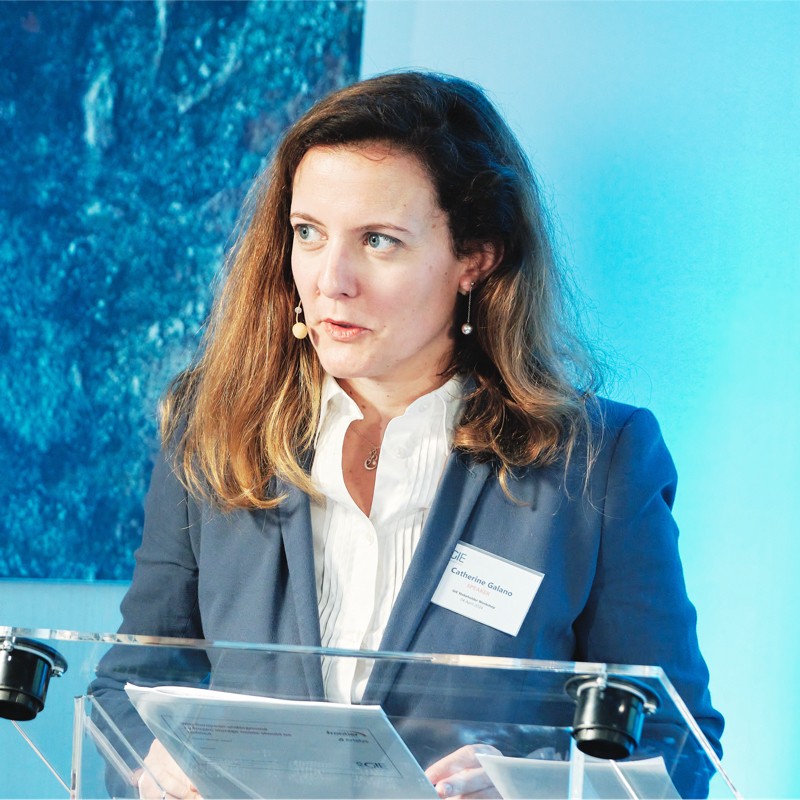
Catherine Galano, Executive Director at Frontier Economics
Catherine Galano is an Executive Director at Frontier Economics and leads the firm’s activities in France. She advises French and European clients on matters of strategy, regulation and public policy, with a particular focus on the energy and transport sectors. Catherine Galano works on a range of issues including market design, infrastructure access pricing, competition, asset acquisition and sale, and public policy evaluations.

Stefan Rohm, Senior Principal at Frontier Economics
Stefan Rohm is a Senior Principal at Frontier Economics. He advises operators, investors and public authorities on all economic aspects related to essential infrastructure sectors, including economic regulation, infrastructure financing and commercial strategy. In this context, Stefan Rohm supports his clients on the future challenges facing infrastructure, including the energy transition, strategic autonomy and resilience.
About PMP Strategy
PMP Strategy is an independent International strategic management consulting firm distinguished by Partners who bring C-level operational experience and combine deep sector expertise with strategic rigor to deliver tangible, lasting impact.
For over twenty years, we have served as trusted advisors to executive committees and investors across North America, Europe, the Middle East, and Africa. We specialize in five key sectors where transformation is most critical: Telecoms, Media & Technology (TMT), Private Equity, Financial Institutions, Transport & Mobility, and Industry & Energy. Our Transversal Performance practice leads complex, cross-sector transformation programs, while our Innovation Lab—a dedicated team of AI experts—supports client engagements worldwide from our headquarters in Paris and our network of international offices.
Our approach is built on partnership—designing tailored strategies alongside clients and working hand in hand to drive implementation, delivering measurable results that evolve with their ambitions. Learn more at www.pmpstrategy.com
Press Contact:
Jennifer Campbell
+33 6 32 05 14 27
jcampbell@pmpstrategy.com